
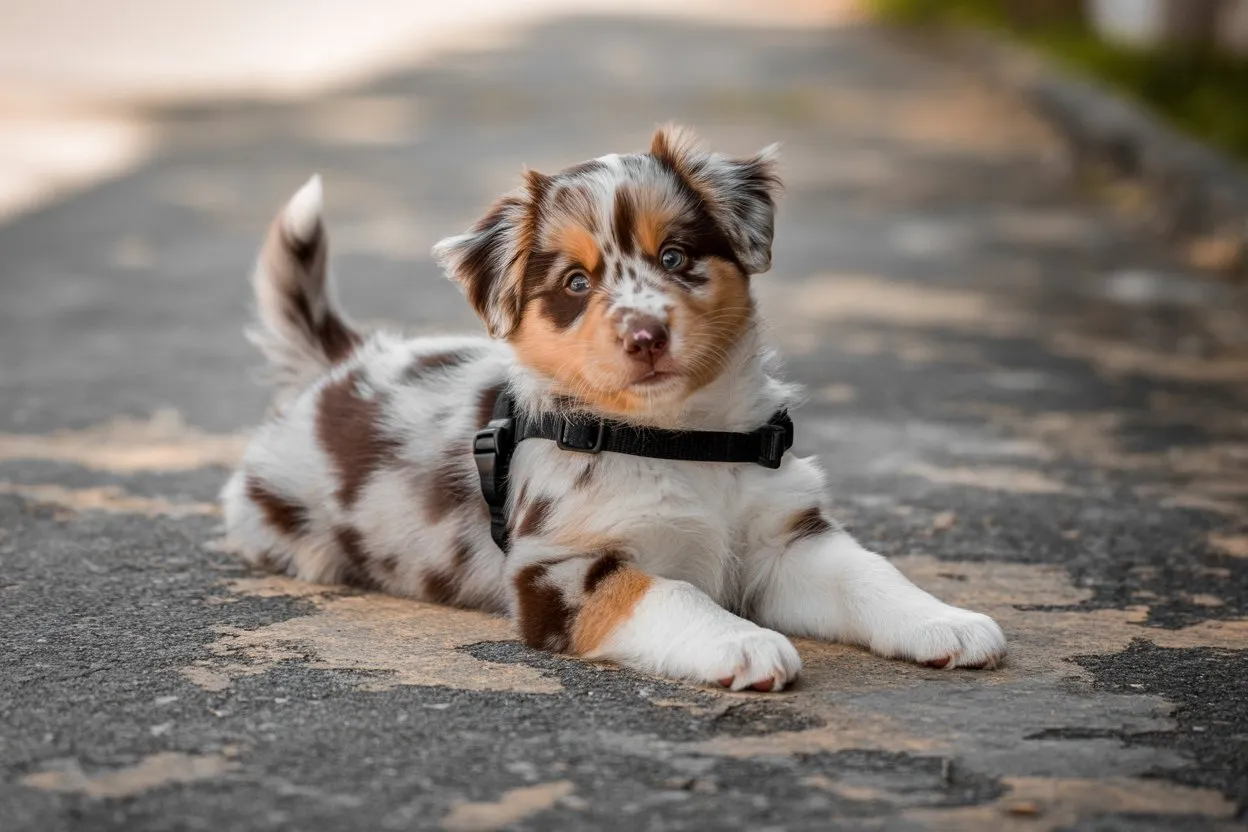
The Mini Aussie Secret Trainers Don’t Talk About
When I first brought Copper home, I thought he was just like any other puppy.
Hyperactive, stubborn, and exhausting. But eight weeks in, everything changed, and
it wasn’t because of expensive training classes or complicated techniques.
What separates the Mini Aussies that transform in weeks from those that take
months? It’s not genetics. It’s not breed. It’s something so simple that most
trainers overlook it completely.
After working with over 1,200 Mini Aussie owners, I discovered the pattern:
the puppies that learned fastest weren’t the ones in the fanciest training programs.
They were the ones whose owners understood ONE critical principle that professional
trainers use but rarely share.
This principle flipped everything
I thought I knew about dog training. Instead of
fighting their natural herding instincts, we CHANNELED them. Instead of punishing
mistakes, we REWARDED the correct behavior before it happened. And instead of
long, exhausting sessions, we used short, focused bursts of mental stimulation
that kept their brilliant minds engaged without burning them out.
The results? Puppies that went from chaotic to confident in exactly 8 weeks.
No more excessive barking. No more random nipping. No more sleepless nights.
Just a calm, obedient, and genuinely happy Mini Aussie.
If you have a Mini Aussie puppy, whether they’re causing chaos right now or
you want to prevent problems before they start, this is the one thing you
need to know.
There’s something almost strangely familiar about meeting a Charming Mini Aussie Puppy, even if you’ve never seen one before. Maybe it’s the way they pause mid-step, as if they’re deciding whether you’re a friend, or just another human wandering around with too many expectations. I’m not entirely sure, honestly, every Mini Aussie seems to give off a slightly different vibe, but they all have this spark that makes people stop and think, “Wait… is this the dog I’ve been looking for?”
Most folks first fall for the visuals: the bright coats, the marbled eyes, the whole “small but important” posture they don’t even try to hide. But once you spend a few minutes with one, you realize there’s something deeper going on. These puppies feel almost too aware, not in a spooky way, but in a “they’re paying attention to everything you do” kind of way. One moment they’re glued to your ankles, the next they’re watching you from across the room, processing something you didn’t even know you were projecting.
And I’ll be honest, owning a Mini Aussie isn’t just owning a cute dog. It’s more like stepping into some kind of ongoing negotiation. They’re smart, sometimes smart enough to outmaneuver you without meaning to. I’ve seen new owners get surprised (or overwhelmed) when their puppy seems to learn a routine before they do. At the same time, these pups can be wonderfully soft. They pick up on tone, mood, tension, occasionally faster than humans around them.
Some people imagine they’re getting a calm, small companion dog. Well… sort of. Mini Aussies do love being close, but they’re wired for purpose. The herding instinct doesn’t just switch off because they’re adorable and compact. Sometimes they need you to give them a job, even if the “job” is just a walk that goes a little longer than planned or a silly backyard game of “herd the soccer ball.”
Still, for many families and first-time owners, that’s exactly the magic. A dog that doesn’t just exist alongside you, but participates, sometimes messily, sometimes too energetically, but always with a kind of honesty that’s rare. And throughout this guide, we’ll unpack what living with a Charming Mini Aussie Puppy actually feels like, so you can decide if their mix of joy, chaos, loyalty, and brainpower fits into your everyday life.
What Makes a Charming Mini Aussie Puppy So Special?
It’s hard to explain why a Charming Mini Aussie Puppy, the moment you meet one, feels a little different from other pups. Maybe it’s the way they look straight at you, not past you, with this odd mix of curiosity and confidence. Or maybe it’s just that tiny spark they carry, like they already have some opinions about you before you’ve even said hello. I’m not totally sure, honestly, because every Mini Aussie seems to carry their own… rhythm? personality? Something like that.
A lot of people fall in love with them for the obvious stuff, the colorful coats, those bright eyes, the almost “painted” look they have. But after a few minutes with one, you start feeling something else beneath the surface. They’re thinking. Like really thinking. You’ll notice them watching your hands, your steps, your tone, sometimes even the mood in the room, and reacting in a way that feels more intentional than you expect from a puppy. I’ve caught myself, more than once, pausing because a Mini Aussie puppy seemed to understand a moment before I did.
If I’m being honest though, living with one isn’t the same as just bringing home a cute, fluffy companion. It’s more like starting a relationship with a dog who has… well, expectations. And they’re not shy about letting you know when something isn’t stimulating enough, or when they’ve decided it’s time for a change in routine. Some days, you’ll wonder how such a small dog can have such big energy, or big opinions. Other days, they’ll get unexpectedly soft and cling
The Personality of a Mini Aussie: Intelligence, Sensitivity, and Big-Dog Energy
The first thing people usually notice about a Mini Aussie’s personality is how present they are. It’s like they step into a room and instantly, quietly start mapping out everything, the people, the sounds, even the emotional temperature. A Charming Mini Aussie Puppy, despite being small enough to scoop up with one arm, somehow carries the energy of a much larger dog. Honestly, sometimes you forget just how little they are because their confidence fills the space before their paws do.
Mini Aussies are famously intelligent, but what often surprises new owners is the kind of intelligence they have. It’s not just “fetch the ball” smart, it’s “figure out the pattern behind your behavior” smart. They pick up routines quickly, almost too quickly, and sometimes you’ll catch them anticipating events before they happen. I’ve seen puppies learn that the sound of keys means “someone’s leaving,” and they’ll sit right in front of the door as if negotiating terms. Their sensitivity plays into this too, tone matters, tension matters, even tiny mood shifts matter. A raised eyebrow can be enough for them to pause and reconsider their next move.
But, and here’s the part that people gloss over, that emotional intelligence cuts both ways. Mini Aussies can take things personally. If training gets too sharp, or if they feel ignored, you might see them withdraw or act out in small, subtle ways. Not bad-dog behavior, just… signals. It’s almost like they’re saying, “Hey, I’m trying here, meet me halfway.” That sensitivity also makes them incredibly loyal. Once a Mini Aussie bonds with you, they don’t just follow you around the house, they sync up with you, stepping into your routine as if they’ve been rehearsing it.
This breed also brings a kind of bubbling enthusiasm that feels contagious when channeled well and overwhelming when it’s not. The “big-dog energy” isn’t just a phrase, they work, think, and react like larger herding breeds. They can become the unofficial supervisor of household activity, keeping mental tabs on everything. And yes, sometimes that includes herding the kids or circling you during walks because, well… instinct is instinct.
H3: Are Mini Aussies Good Family Dogs?
Generally, yes, as long as the family understands what they’re getting into. Kids who like interactive dogs usually bond quickly, while very young children may need guidance because the puppy might try to herd them now and then. With steady routines, patience, and positive reinforcement, Mini Aussies often become the emotional heart of the household.
H3: FAQ, Do Mini Aussies Get Attached to One Person?
Often, yes. They tend to choose a “primary person,” but they still bond deeply with the whole family. Their attachment style is more about emotional consistency than favoritism.