
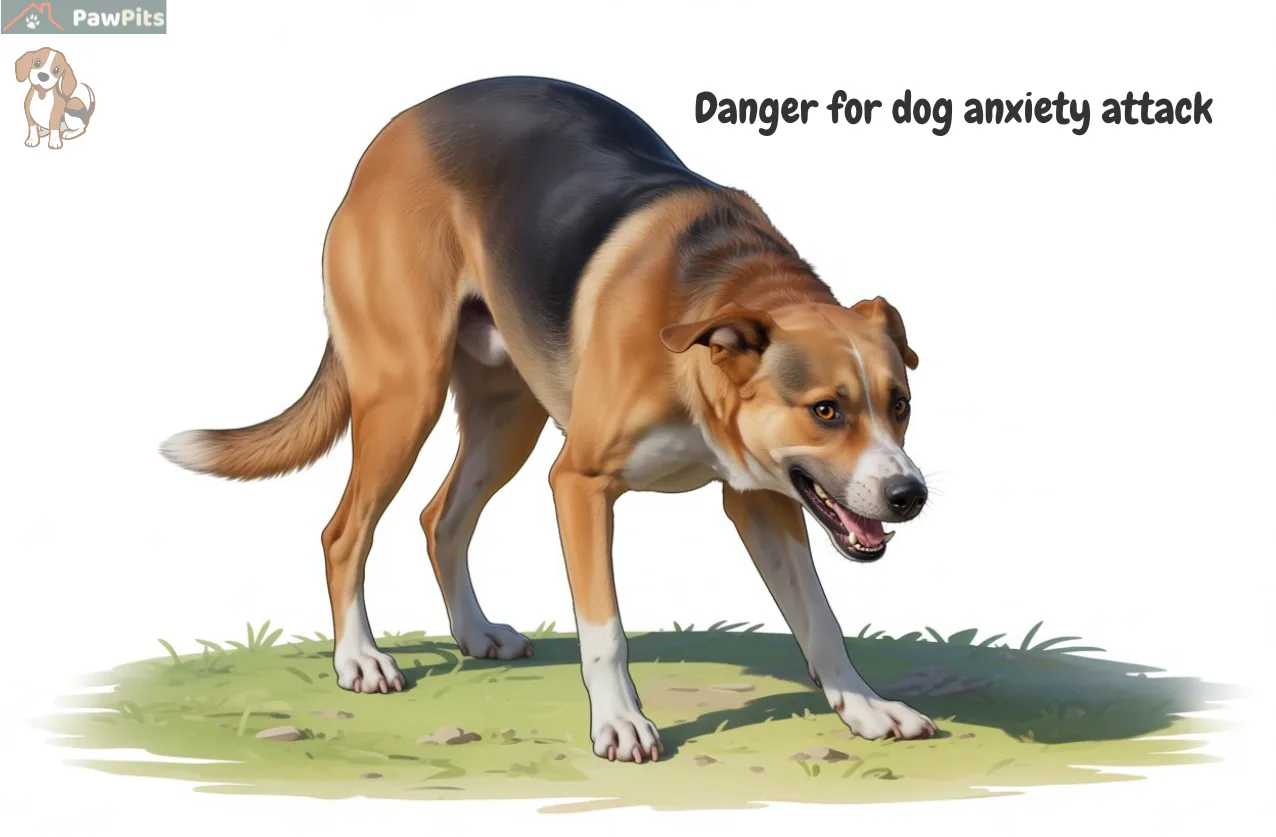
There’s a specific kind of fear that hits you when your dog suddenly panics , the type of fear that makes your heart jump before you even understand what you’re looking at. A dog anxiety attack doesn’t look like the quiet, subtle anxiety you might’ve seen before. It comes fast, sometimes out of nowhere, and for a moment you might think something is seriously, medically wrong.
If you’ve found yourself in that moment, staring at your dog and thinking, “What is happening right now?” , you’re not alone. And, honestly, you’re not a bad owner for not recognizing it sooner. Most people don’t.
This guide will walk you through what a dog anxiety attack really is, how it shows up, and what you can do to help , even if your hands feel shaky in the moment.
What a Dog Anxiety Attack Actually Is

A dog anxiety attack is basically the emotional equivalent of the ground dropping out beneath your dog’s feet. It’s a sudden, overwhelming surge of fear or panic that pushes their nervous system into a full-on survival mode , fight, flight, or freeze.
It’s different from general dog anxiety, which can simmer quietly for days or weeks. An anxiety attack is sharp, intense, immediate. Sometimes it lasts only a few minutes; sometimes it lingers longer than you expect.
A lot of owners describe it like this:
“My dog just… wasn’t there. It was like something switched in them.”
That’s actually a pretty accurate way to describe it.
Real Signs of a Dog Anxiety Attack
These aren’t the mild signs you see in everyday anxious dogs. Anxiety attacks have a very specific flavor , fast, overwhelming, and often unfamiliar even to long-time dog owners.
Signs may include:
- Sudden hyperventilating or rapid breathing
- Frantic pacing or scrambling to escape a room
- Shaking violently (not the light shiver you see in nervous dogs)
- Glassy or widened eyes
- Full-body tension , muscles bracing like a coiled spring
- Complete shut-down: freezing, refusing to move, staring blankly
- Disorientation: walking in odd patterns, bumping into objects
- Inability to respond to your voice
One of the scariest parts is that your dog may not even seem to recognize you during an anxiety attack. That’s normal , not reassuring, but normal.
When anxiety becomes persistent and starts affecting daily life, these dog anxiety disorder symptoms may point to a deeper emotional issue.
What Causes a Dog Anxiety Attack?
Most attacks come from something called trigger stacking. This is when your dog experiences multiple stressors (even tiny ones) that pile up silently until one small trigger tips them over the edge.
Common causes include:
- A loud noise during an already stressful day
- Sudden environmental changes
- A scent or sound that taps into a past trauma
- Overstimulation (too many people, too much noise, too much everything)
- Pain or discomfort the owner didn’t know about
Sometimes the attack really does look random, and that’s incredibly frustrating , but it’s usually the result of invisible emotional buildup.
What to Do When Your Dog Is Having an Anxiety Attack
This part is overwhelming for a lot of people, so take it slow. You don’t need perfect technique , just presence.
Step 1: Stay still and grounded
Don’t rush toward your dog. Sudden movement makes things worse. Take a breath (yes, your dog feels your breathing).
Step 2: Lower your voice , a lot
Speak softly, almost like you’re talking to a very young child or reading a bedtime story.
Step 3: Give your dog space
Some dogs need closeness, others need distance. Let your dog choose by not crowding them.
Step 4: Reduce sensory input
Turn off the TV, close curtains, dim lights if you can. Quiet helps more than people think.
Step 5: Guide, don’t grab
If you need to move your dog to a calmer place, gently guide , don’t pull or lift.
Step 6: Let the episode pass
Most attacks peak quickly. Your calm presence is the anchor.
Important: Do not punish, scold, or try to “snap them out of it.” That only adds fear to fear.
After the Attack: What Happens Next
A lot of owners expect their dog to bounce right back after an anxiety attack. But dogs often go into a soft, emotional “aftershock.” They might seem clingy, confused, overly tired, or strangely quiet.
This is normal.
Your job after the attack is simple:
- Offer water
- Keep the environment calm
- Allow extra rest
- Avoid overstimulation for the next few hours
It’s also a good moment to gently observe your dog’s body language , you’ll learn more here than during the attack itself.
Preventing Future Anxiety Attacks
Prevention doesn’t look the same for every dog, but these steps help most:
- Track triggers in a small journal (even 2–3 notes can be revealing)
- Keep routines predictable
- Build more decompression time into your dog’s day
- Avoid stacking stressful events
- Use calming environments regularly, not just during panic
- Consult a vet or behaviorist if attacks become frequent
If you want a deeper breakdown of everyday anxiety behaviors, your next read should be the [Anxious Dog] article , it connects the dots between daily stress and full anxiety attacks.
And if you want the broader emotional picture, the [Dog Anxiety] guide ties everything together.
Conclusion
Seeing your dog go through an anxiety attack is awful , there’s no softer way to put it. But these moments don’t define your dog, and they don’t define you as an owner either. You’re learning. You’re paying attention. And that already makes your dog safer than you probably realize.
With time, awareness, and a steady presence, your dog can recover faster, trust deeper, and feel safer with you by their side.
2 thoughts on “Dog Anxiety Attack: Early Warning Signs Owners Miss”