
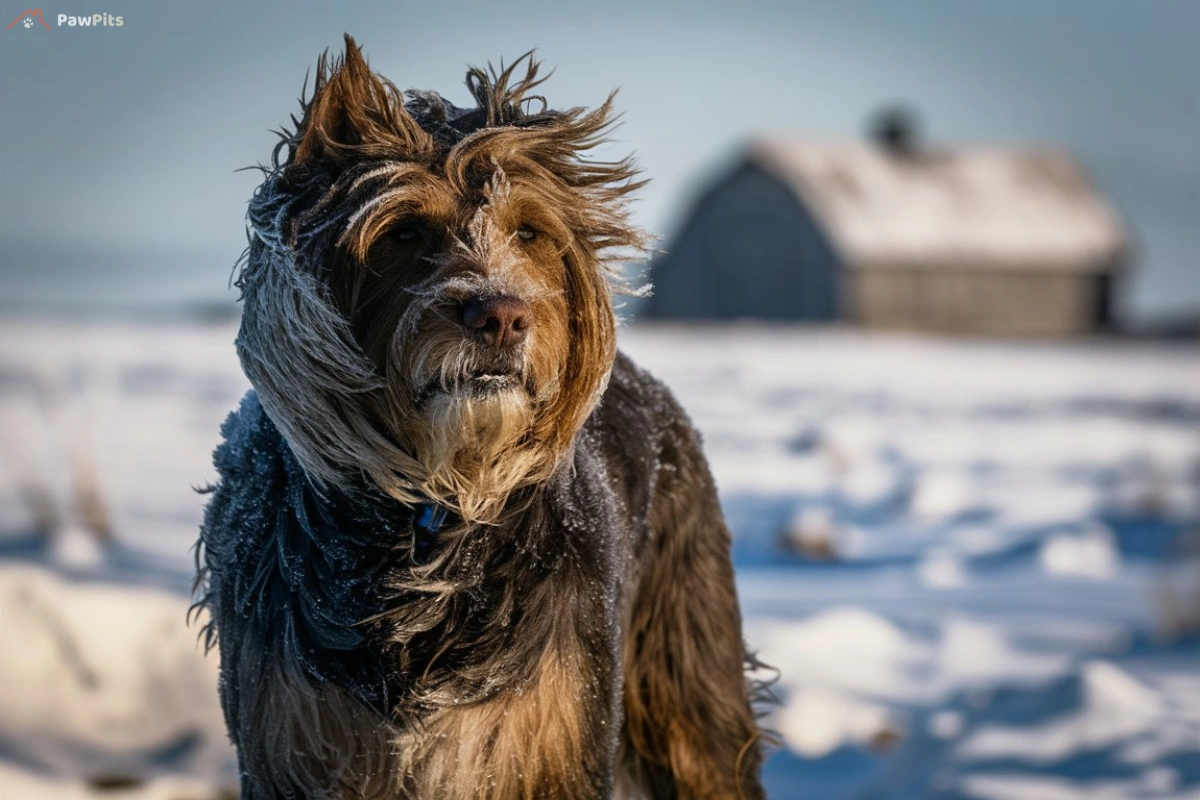
You know those dogs that look like they stuck their paw in an electrical socket? That wild , scruffy coat that makes them look half-comical , half-crazy? That’s the Idaho Shag. And honestly , if you’re judging this breed by appearance alone , you’re missing the entire point.
This isn’t some designer breed created for Instagram likes. The Idaho Shag was built by ranchers who needed a dog that could handle stubborn cattle , work all day in brutal conditions , and come back for more the next morning . No fancy papers . No breed standards. Just raw working ability passed down through generations of Idaho ranchers who knew what actually mattered.
If you’re looking for a dog that looks polished , this isn’t it. But if you want a dog that will outwork , outsmart , and outlast almost any other herding breed out there? Keep reading. Because what makes the Idaho Shag valuable has nothing to do with how it looks and everything to do with what it can do.
What Even Is an Idaho Shag? (And Why You’ve Probably Never Heard of It)
Let’s get this out of the way: the Idaho Shag isn’t an officially recognized breed. You won’t find it registered with the AKC. There’s no breed standard defining exactly what it should look like. And honestly? That’s kind of the point.
This breed developed naturally in Idaho’s ranching communities , where function mattered infinitely more than form. Ranchers needed dogs that could handle cattle across rough terrain in extreme weather. They didn’t care about coat color or ear shape. They cared about whether the dog could work.
So they started crossing dogs that had the traits they needed. Airedale Terriers for toughness and grit. Border Collies for intelligence and herding instinct. Australian Shepherds for versatility. Sometimes Kelpies or Blue Heelers got mixed in. The result ? A dog that looks like a genetic accident but works like a machine.
The name “Idaho Shag” comes from that distinctive scruffy coat and the state where it originated. Some old-timers still call them “Pahsimeroi Fuzzys” (I think that’s how you spell it?) after the valley where they were first bred. But regardless of what you call them , ranchers across Idaho , Montana , and Wyoming swear by them.
What’s wild is how consistent these dogs are despite having no official breeding standards. Yeah , they vary in size and coat color. But the temperament? The work drive? The herding ability? That stays remarkably uniform because ranchers only breed the dogs that can actually do the job. If a dog can’t handle cattle , it doesn’t get bred . Simple as that.
The Origin Story Nobody Talks About
Unlike most dog breeds with documented histories and founding kennel clubs , the Idaho Shag’s story is messy. And I mean that in the best way possible.
It started sometime in the mid-to-late 1900s when ranchers in eastern Idaho realized they needed a better working dog. Border Collies were great with sheep but sometimes lacked the grit needed for stubborn cattle. Australian Shepherds were versatile but not always tough enough for the brutal conditions. Airedales had the size and tenacity but not the refined herding instinct.
So ranchers did what practical people do : they experimented. They crossed breeds , kept what worked , and bred those dogs to other working dogs that proved themselves in the field. No fancy genetics. No careful pedigree tracking. Just function-based selection over multiple generations.
The breed gained traction in places like the Lost River Valley , the Pahsimeroi region , and around Challis , Idaho. Ranchers who saw these dogs in action wanted their own. Word spread within the ranching community not through marketing or dog shows , but through real-world performance.
One breeder named Susie Morton (or was it Sue? I always mix that up) bought her first Idaho Shag about 30 years ago and became one of the first intentional breeders in central Idaho. She didn’t set out to create a breed; she just recognized that these dogs had something special and wanted to preserve it. Today , multiple ranchers breed Idaho Shags , and demand has grown so much that puppies often sell before they’re even born.
But here’s what’s interesting: despite growing popularity , the Idaho Shag remains relatively unknown outside of ranching circles. You won’t see them at Westminster . They’re not trending on TikTok (yet). They’re just quietly doing their job on ranches across the American West , exactly as they’ve done for decades.
Trait 1: Herding Instincts That Put “Purebreds” to Shame
I’ve watched Border Collies work. I’ve seen Australian Shepherds herd. Both are exceptional breeds with centuries of refinement behind them. And yet , ranchers who’ve worked with Idaho Shags will tell you something surprising: these scruffy mutts often outperform the “official” herding breeds. I mean , think about it.
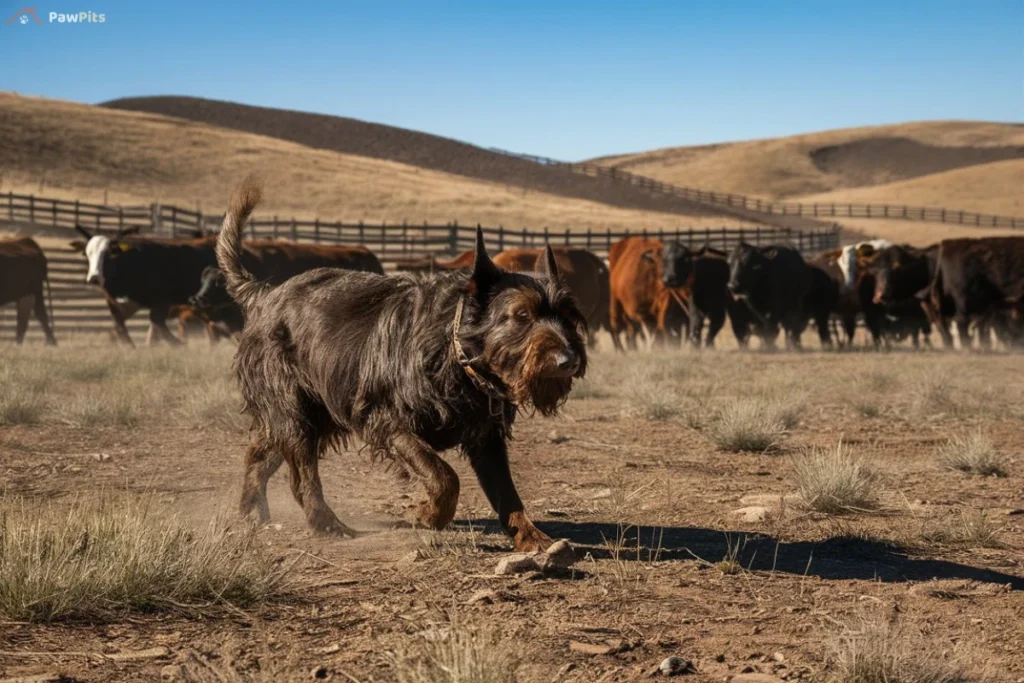
Why? Because Idaho Shags were bred for one specific job: handling cattle in the roughest conditions imaginable . Not sheep on flat pastures. Not controlled farm environments. Cattle. Stubborn , 1,200-pound animals that don’t always want to cooperate. And these dogs don’t just move them , they control them. It’s honestly kind of unreal to watch .
The key difference is their approach. Border Collies tend to use “eye” , that intense stare that controls sheep through psychological pressure. Beautiful to watch , incredibly effective with sheep. But cattle ? Cattle don’t care about your stare. They need physical presence. And that’s where the Idaho Shag shines.
These dogs use a mix of positioning , movement , and when necessary , controlled force to move cattle. If a stubborn cow refuses to move , an Idaho Shag will let it get close , let it sniff , and then grab it by the nose. Not aggressively. Not to injure. Just enough to say , “I’m serious. Move.” And the cow moves. Every. Single. Time.
That combination of intelligence and grit is what sets them apart. They’re smart enough to assess situations independently , they don’t need constant commands. But they’re tough enough to handle confrontational livestock without backing down. It’s a balance that’s incredibly hard to find in other breeds. Honestly , I’m not sure how many breeders could intentionally create that if they tried.
And unlike some herding dogs that work well with either cattle or sheep but not both , Idaho Shags are genuinely versatile. They can switch between managing cattle , moving sheep , or even handling goats without needing different training. That adaptability makes them invaluable on mixed-livestock operations.
Here’s something ranchers notice : these dogs don’t quit. Ranchers tell stories of dogs getting kicked by cattle , shaking it off , and going right back to work. Not because they’re reckless. Because that’s what the job requires. It’s wild.
Trait 2: That Coat Isn’t Just for Show (It’s Armor)
Let’s be real: the Idaho Shag’s coat looks ridiculous. It’s shaggy , unkempt , and gives the impression that the dog just rolled out of bed after a rough night. But that “accident with an electric fence” look? It’s actually functional. I mean , completely functional. I used to think it was just bad breeding , but no.
The coat is a double layer. The outer layer is rough and wiry , providing protection against brush , thorns , and the teeth or hooves of livestock. The undercoat is dense and insulating , keeping the dog warm in freezing Idaho winters and surprisingly cool in summer heat.
Unlike the sleek , groomed coats of show dogs , the Idaho Shag’s fur repels water naturally. Rain and snow don’t soak through easily , which matters when you’re working cattle in a blizzard. Mud and dirt don’t mat as badly as you’d expect because the texture of the coat sheds debris fairly well. I don’t fully understand the science behind it , but it works .
Compared to other long-haired working breeds , the Idaho Shag’s coat is surprisingly low-maintenance. You’re not dealing with the constant grooming demands of a Rough Collie or the shedding chaos of a German Shepherd. The coat does shed , moderately year-round , heavier during seasonal changes , but it’s manageable.
Grooming is straightforward. Brush weekly with a slicker brush to prevent mats and remove loose fur. During shedding season (spring and fall) , brush more frequently. Bathing? Only when actually dirty . Over-bathing strips the natural oils that make the coat weather-resistant. Some ranchers told me they never bathe their dogs , and honestly , that seems extreme , but I get the philosophy .
One thing to watch for: burrs and twigs. These dogs work in rough terrain , and their coats can trap plant material . After a day of work , inspect the coat and remove anything caught in the fur before it becomes a mat. It’s tedious but necessary.
Some people trim around the eyes and paws to keep the dog comfortable , but full haircuts aren’t necessary. In fact , shaving a double-coated dog like the Idaho Shag can actually harm their temperature regulation. The coat is designed to insulate in both directions , keeping warmth in during winter and heat out during summer . I learned that the hard way talking to a groomer.
Trait 3: Intelligence That’s Almost Annoying
Idaho Shags are smart. Like , really smart. Smart enough that some owners describe them as “too smart for their own good.” And I get it , even if it sounds like I’m exaggerating. These dogs don’t just follow commands , they evaluate whether your command makes sense.
That independence comes from their working background. When you’re herding cattle across vast rangeland , you can’t micromanage every move the dog makes. They need to think for themselves , assess situations , and make quick decisions. That’s exactly what Idaho Shags do. And it’s both their greatest strength and biggest challenge for owners.
For experienced dog handlers , this intelligence is fantastic. You can teach an Idaho Shag complex tasks quickly. They pick up on patterns , anticipate what comes next , and often figure out solutions before you even give a command. Some ranchers barely need to direct their Shags , the dogs just know what needs to happen . Seriously.
But for first-time owners or people used to more obedient breeds? It can be frustrating. Maybe even more than frustrating. These dogs will test boundaries. They’ll decide that your command doesn’t make sense and simply ignore it. Not out of defiance , exactly. More like… independent judgment. It’s almost like they’re gaslighting you about whether your idea was good in the first place.
Training requires consistency and clear leadership. These dogs respect structure , but they won’t blindly obey someone they don’t trust. You need to establish yourself as a confident , fair leader early. Positive reinforcement works well , treats , praise , and play as rewards. Harsh corrections tend to backfire because Idaho Shags are sensitive to unfair treatment. Well , some of them are anyway.
Socialization matters more with this breed than many people realize. Without proper exposure to different environments , people , and animals during the critical window (before 16 weeks) , they can become overly protective or territorial. But with good socialization , they’re confident and adaptable. Or at least , that’s what the research suggests.
Mental stimulation is non-negotiable. A bored Idaho Shag becomes a destructive Idaho Shag. Puzzle toys , advanced training , herding work , or dog sports keep their minds engaged. Without it , they’ll find their own entertainment , usually something you won’t appreciate. Like destroying your porch. Ask me how I know that.
Trait 4: Loyalty That Borders on Possessive
Idaho Shags bond deeply with their owners. Like , really deeply. This isn’t the casual affection of a friendly Labrador. This is intense , focused loyalty that ranchers describe as almost possessive. Some people might even say it’s over the top , but I think that’s what you get with a working dog.
These dogs pick their person and stick close. They follow you from room to room. They position themselves where they can see you. They’re protective without being aggressive (when properly socialized) , but they’re definitely not going to be everyone’s best friend. Which , honestly , can be a good thing or a bad thing depending on your situation.
With livestock , this loyalty translates into reliability. An Idaho Shag won’t wander off mid-job. It won’t get distracted by random wildlife (well , mostly). It stays focused on the task because it’s working with you , not just for you.
With family , they’re affectionate and gentle , especially with kids they’ve grown up around. But they’re naturally reserved with strangers. Early socialization helps , but you’re never going to have a dog that greets every stranger with tail wags. That’s just not how they’re wired. I wish I could tell you otherwise , but that’s the reality.
This breed thrives when it has a clear role in the family or farm. They’re not content being “just a pet.” They need to feel useful. Whether that’s herding livestock , protecting property , or even participating in dog sports , they need purpose. Without it , they get depressed or anxious. I think. I’m not 100% sure about that , actually.
Trait 5: Endurance That Embarrasses Other “Working” Breeds
Let’s talk stamina. Because this is where the Idaho Shag really shines. Or at least , that’s what I’ve been told by multiple ranchers.
These dogs were bred to work all day. Not “go for a jog and then nap” all day. Actually all day. Ranchers describe taking their Shags out for 8-10 hour days moving cattle across rough terrain , and the dogs are still ready to go at the end.
That’s not normal. Even high-energy breeds like Border Collies or Australian Shepherds will tire eventually. Idaho Shags just… don’t. Or at least , not easily. It’s kind of insane , honestly.
Part of it is physical conditioning. These dogs are typically around 40-50 pounds , big enough to handle livestock but light enough to stay agile and conserve energy. Their build is functional: strong legs , solid bone structure , efficient movement.
But it’s also mental drive. They don’t just have energy; they have purpose. When they’re working , they’re engaged in a way that sustains them beyond normal physical limits. It’s the difference between running on a treadmill and playing a sport you love. I think that’s a fair comparison.
For potential owners , this means one thing: you need to match their energy. If you can’t provide 1-2 hours of structured activity daily , herding , hiking , agility , advanced training , this breed will destroy your sanity and probably your house. Or your furniture. Or both. Definitely both if you leave them alone.
Trait 6: Toughness That’s Almost Unbelievable
Idaho Shags don’t quit. Ranchers tell stories of dogs getting kicked by cattle , shaking it off , and going right back to work. Not because they’re reckless or anything. Because that’s what the job requires.
This toughness isn’t just physical. It’s mental resilience. These dogs handle harsh weather without complaint. They work through discomfort. They push through adversity. It’s almost stubborn , which I guess makes sense given their background.
In winter , their coats protect them from freezing temperatures. In summer , they regulate heat surprisingly well despite the thick fur. They handle rough terrain , rocky ground , steep hills , dense brush , without slowing down. Or so I’m told.
But they’re not indestructible. Regular vet care , proper nutrition , and attention to injuries matter. The difference is that Idaho Shags will often hide discomfort because their work drive overrides pain signals. Owners need to watch for subtle signs of injury or illness. It’s honestly kind of heartbreaking when you think about it , they’ll keep working even when hurt.
Trait 7: Adaptability Across Different Ranch Environments
One of the most underrated traits of the Idaho Shag is how well they adapt to different working conditions. Seriously , it’s wild.
Large open ranches? They thrive. They can cover miles without tiring and handle large herds independently. It’s like they were made for it.
Small family farms? Still effective. They adjust their energy to the space available and work closely with their owners. They don’t need acres and acres , though they definitely perform better with more space.
Mountainous terrain? No problem. Their agility and strong legs handle steep , rocky ground easily. I haven’t personally seen this , but ranchers swear by it.
Mixed livestock? They switch between cattle , sheep , and goats without needing separate training for each. Which is kind of incredible if you think about it.
This adaptability is rare. Most herding breeds specialize. The Idaho Shag generalizes , and that’s exactly what makes them so valuable to ranchers who need one dog that can do everything. Or at least , most things.
Should You Actually Get an Idaho Shag? (Real Talk)
Before you fall in love with the idea of this breed , let’s be honest about whether it’s right for you. Because honestly , it’s not right for most people , and that’s okay.
You might be a good fit if:
- You live on a farm or ranch with real work for the dog
- You’re an experienced dog owner who understands working breeds
- You can provide 1-2+ hours of structured activity daily
- You enjoy outdoor life and want a dog that can keep up
- You value function over appearance
This breed is probably wrong for you if:
- You live in an apartment or suburban setting without space
- You work long hours and can’t provide daily engagement
- You’re a first-time dog owner attracted to the “rare breed” factor (which , I get it , but still)
- You want a low-maintenance companion
- You prefer a dog that’s friendly with everyone
Idaho Shags need experienced owners who understand that this isn’t a pet , it’s a working partner. If you can’t provide the lifestyle this breed needs , you’re setting yourself up for frustration and setting the dog up for behavioral problems. I know I keep saying this , but it’s true.
Finding an Idaho Shag (And What to Expect)
Because this isn’t a recognized breed , finding an Idaho Shag takes effort. Most breeders are ranchers who breed their working dogs occasionally. Puppies typically sell for $300-$500 , far less than most purebred working dogs. Which is a steal , honestly , if you ask me.
Expect to:
- Join waiting lists (puppies sell fast , like within days)
- Travel to Idaho , Montana , or Wyoming to pick up your dog
- Provide information about your lifestyle and experience
- Potentially be turned down if the breeder doesn’t think you’re a good fit
Reputable breeders care about where their dogs go. They want to see them succeed , which means placing them in appropriate homes. It’s actually kind of refreshing compared to some breeders , I’ll tell you that.
Rescue is less common but possible. Check farm dog rescues or livestock guardian rescues in western states. Sometimes Idaho Shags end up in rescue when owners underestimate their needs. Unfortunately.
The Reality of Living with an Idaho Shag
Look , I’m not going to romanticize this. Idaho Shags are incredible dogs for the right owner. But they’re demanding. They need work. They need structure. They need an owner who understands that this breed was created for a specific purpose and thrives when fulfilling that purpose. It’s not complicated , but it is absolute.
If you have a ranch , livestock , or an extremely active lifestyle that matches this breed’s intensity , an Idaho Shag can be an unmatched companion. Loyal , intelligent , hardworking , and tough in ways that constantly surprise you. Seriously , if this is you , get one.
But if you’re looking for a dog that adapts to your existing life? Get a different breed. Because the Idaho Shag won’t adapt. It will demand that you meet its needs , and if you can’t , everyone loses. And I mean everyone , the dog , your family , your house (maybe literally).
So before you contact a breeder , ask yourself: Am I ready for a dog that will challenge me , push me , and require more from me than almost any other breed? If yes , welcome to the Idaho Shag community. If no , that’s okay too. Knowing what you can handle is the most responsible thing you can do. Seriously , props to anyone who admits this breed isn’t for them.
What’s your experience with working breeds? Have you ever worked with an Idaho Shag? Drop your thoughts in the comments , I’d love to hear from people who’ve actually lived with these dogs.