The Idaho Shag: The Ugliest Good Dog You’ll Ever Meet
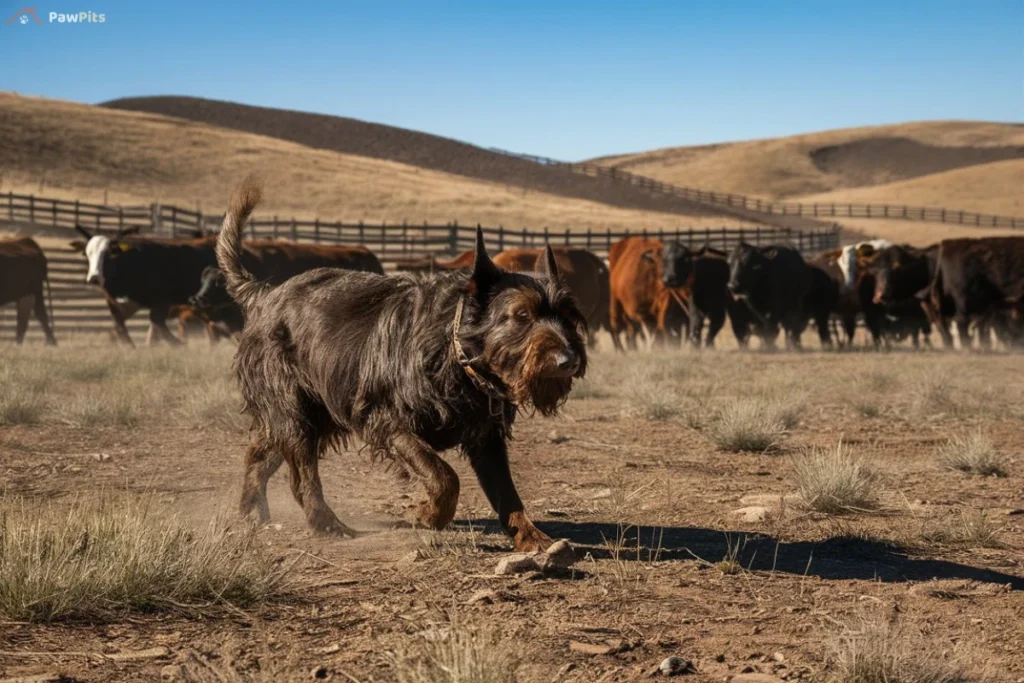
If you’ve spent any time around Idaho ranch country, you’ve probably seen one before you knew it had a name. A dog that looks like it lost a fight with a wind turbine, tearing across a pasture after a cow twice its size like it’s the easiest thing in the world. That’s the Idaho Shag. And if you’re judging it on looks, you’re missing the entire point of the breed.
This dog wasn’t designed. It was assembled, out of necessity, by ranchers who needed something that could handle stubborn cattle, work sunup to sundown, and show up ready to do it again the next day. No papers, no breed standard, no kennel club, just generations of people who bred for one thing: whether the dog could do the job.
Here’s what you’ll get out of this piece:
- Where the Idaho Shag actually comes from (and who’s still breeding them)
- Why ranchers say it outworks “official” herding breeds on cattle
- What that famously scruffy coat is actually for
- The realistic case for, and against, owning one
What Is an Idaho Shag, Exactly?
No AKC registration. No breed standard. No official recognition at all. And that’s more or less the point, this dog was built by function, not paperwork.
The breed took shape in eastern and central Idaho, in ranching country where nobody had the luxury of caring what a dog looked like as long as it could handle cattle in rough terrain and worse weather. So ranchers crossed what worked: Airedale Terriers for grit and size, Border Collies for brains and herding instinct, Australian Shepherds for versatility, and often a Kelpie or an Australian Cattle Dog (Heeler) thrown into the mix. The result is a mixed breed drawing on four or more parent lines, Airedale Terrier, Border Collie, Kelpie, and Heeler among them. rockykanaka
The name comes from the coat and the state. You’ll also hear it called the Idaho Fuzzy, Idaho Shaggy, or, especially around the Salmon, Idaho area, the Pahsimeroi Fuzzy, after the river valley where a lot of them were bred. A local veterinarian in Salmon has said the name stuck locally for the same dogs other ranchers just call Idaho Shags, describing them as sharp, protective, and eager to please their owners.
Nobody knows exactly who bred the first one or when. That messiness is honestly part of the story, this wasn’t a founder’s vision, it was dozens of ranchers independently arriving at the same solution because the terrain and the cattle demanded it.
Where They Come From, And Who’s Still Breeding Them
One of the better-documented origin threads traces back to Susie Morton, who ranches south of Mackay, Idaho, and bought her first Idaho Shag around thirty years ago, making her one of the earliest intentional breeders in the central part of the state. She didn’t set out to found a breed. She just noticed these dogs had something worth keeping going.
Other ranching families have carried it forward the same way. In one account, a father and son split the work, the parents handling early socialization of the puppies, the son taking over training them to actually work cattle. Ranchers in that circle have described the dogs as gritty and weather-hardy, shrugging off cold that would slow other breeds down.
The pattern shows up across the region: a young Idaho Shag named Buddy, based in the Raft River Valley in southeastern Idaho, became locally known for stamina before he was even a year old. Further north, the dogs turn up doing similar work alongside shepherds, including a mention in a PBS documentary on Idaho sheep grazing, where Idaho Shags are described as helping move flocks over 100 miles across public and private land, working alongside border collies.
They’ve also started showing up in shelters and rescue listings in Montana and Idaho, usually when an owner underestimated what the breed actually needs, which says a lot about who this dog is and isn’t right for.
Trait 1: Herding Instincts That Put “Purebreds” to Shame
Border Collies are exceptional herders, no argument there. But ask a rancher who’s worked both, and a lot of them will tell you the Idaho Shag handles cattle better than the breeds with official pedigrees.
The reason comes down to what each breed was built for. Border Collies use “eye”, that intense, low stare that pressures sheep psychologically. It’s beautiful with sheep. It does almost nothing for a 1,200-pound cow that isn’t interested in cooperating. Cattle need physical presence, not a stare-down, and that’s exactly what the Idaho Shag brings.
When a cow won’t budge, an Idaho Shag will get in close and, if it has to, nip the nose, not to injure, just to make the point. The cow moves. It’s a level of controlled confrontation that most herding breeds simply aren’t built or bred for.
They’re also more flexible than most specialists. A dog that can move cattle one day and sheep or goats the next, without retraining, is genuinely rare, and it’s a big part of why ranchers running mixed livestock operations reach for this breed specifically.
Trait 2: That Coat Isn’t a Design Flaw, It’s Gear
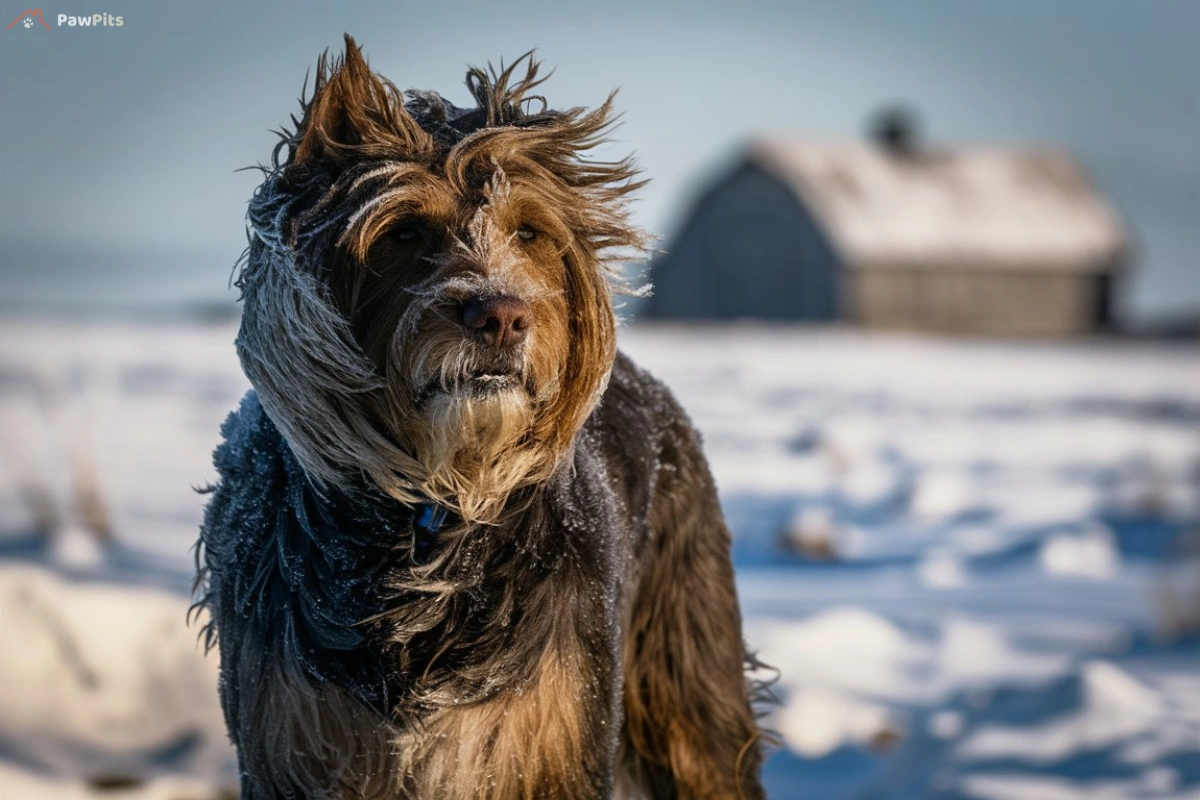
Yes, the coat looks like an accident. It’s the breed’s defining (and most-mocked) feature. But it’s doing real work.
It’s a true double coat: a wiry, weather-resistant outer layer that shrugs off brush, thorns, and the occasional hoof, over a dense insulating undercoat that keeps the dog warm through an Idaho winter and, somehow, reasonably cool in summer. It sheds water and resists matting better than you’d expect from something that looks this unkempt.
Maintenance is lighter than the appearance suggests, a weekly brush with a slicker brush, more often during spring and fall shedding, and baths only when genuinely necessary, since over-bathing strips the natural oils that make the coat weatherproof in the first place. Skip the haircut, too: shaving a double coat like this actually undermines its ability to regulate temperature in either direction.
Trait 3: Intelligence That Can Work Against You
Idaho Shags are smart enough to evaluate whether a command actually makes sense before deciding to follow it. That’s not defiance, it’s the exact trait that makes them useful on open range, where a handler can’t micromanage every move and the dog has to read the situation and act.
For an experienced handler, that’s a huge asset. For a first-time owner used to more obedient breeds, it can be maddening. These dogs test boundaries, and they respond far better to consistent, fair leadership and positive reinforcement than to heavy-handed correction.
Socialization matters more here than with a lot of breeds, without solid exposure to people, animals, and new environments before about 16 weeks, they can turn overly protective or territorial. And a bored Idaho Shag is a destructive one. Puzzle toys and obedience work aren’t optional extras with this breed; they’re basically required maintenance.
Trait 4: Loyalty That Runs Deep, and Narrow
This isn’t a dog that makes friends with everyone. It bonds hard with one person or family, stays close, and is naturally reserved with strangers no matter how well-socialized it is.
With livestock, that focus is exactly what makes it reliable, it won’t wander off mid-job or get pulled off task by something more interesting. With family, especially kids it’s grown up around, it’s gentle and affectionate. It just needs a job. A dog like this without a role, herding, structured training, something with purpose, tends to get anxious or destructive rather than settling into life as “just a pet.”
Trait 5: Stamina That Embarrasses Most “High-Energy” Breeds
Ranchers describe eight-to-ten-hour days moving cattle across rough ground, with the dog still going strong at the end of it. Even notoriously high-drive breeds like Border Collies and Australian Shepherds tend to hit a wall before an Idaho Shag does.
Part of it is build, these dogs typically run 40 to 50 pounds, enough mass to handle cattle without sacrificing the agility to conserve energy over a long day. But a lot of it is drive: this is a dog that’s engaged by the work itself, not just running off excess energy. If you can’t offer at least an hour or two of real structured activity daily, this breed will take that energy out on your house.
Trait 6: Toughness That Borders on Stoic
These dogs shrug off getting kicked, shake it off, and go back to work, not out of recklessness, but because that’s what the job has always required of them. They handle harsh weather and rough terrain without slowing down.
The catch: that same toughness means they’ll often hide pain rather than show it, because the drive to work overrides the instinct to signal discomfort. Owners need to watch closely for subtle signs of injury, since this breed won’t always tell you when something’s wrong.
Trait 7: Genuinely Adaptable Across Ranch Types
Big open range, small family farm, steep mountainous terrain, mixed cattle-sheep-goat operations, the Idaho Shag adjusts to all of them without needing separate training for each. Most herding breeds specialize in one type of livestock or terrain. This one generalizes, which is a big part of why it’s earned such loyalty from ranchers who need one dog that can do several jobs.
Should You Actually Get One?
Be honest with yourself before you fall for this breed.
You’re probably a good fit if:
- You live somewhere with real working livestock, or at least serious space and structure
- You’re an experienced dog owner comfortable with independent-minded breeds
- You can commit to 1–2+ hours of real activity daily
- You care more about ability than appearance
This is probably the wrong breed if:
- You’re in an apartment or a low-activity household
- You work long hours with limited time to engage the dog
- You want a dog that’s instantly friendly with every stranger
- You’re drawn mainly to the “rare breed” novelty
Finding One
Because it’s not a recognized breed, most Idaho Shags come from ranchers who breed their working dogs occasionally rather than commercial breeders. Puppies typically run $300–$500, modest by working-dog standards, but demand is high enough that litters often sell out before they’re born. Good breeders will ask about your lifestyle and may turn you down if they don’t think it’s a fit, which is a good sign, not a red flag. Rescue is less common but does happen, usually through farm-dog or livestock-guardian rescues in Idaho, Montana, and the surrounding states.
The Bottom Line
An Idaho Shag isn’t a dog that adapts to your life, it expects you to meet its needs. For the right owner, someone with real work for it to do or the time to substitute structured activity for that work, it’s about as loyal, capable, and hard to rattle as a dog gets. For everyone else, it’s a recipe for a wrecked porch and a frustrated dog.
If you’ve worked with one, or you’re considering taking one on, I’d like to hear about it in the comments.