
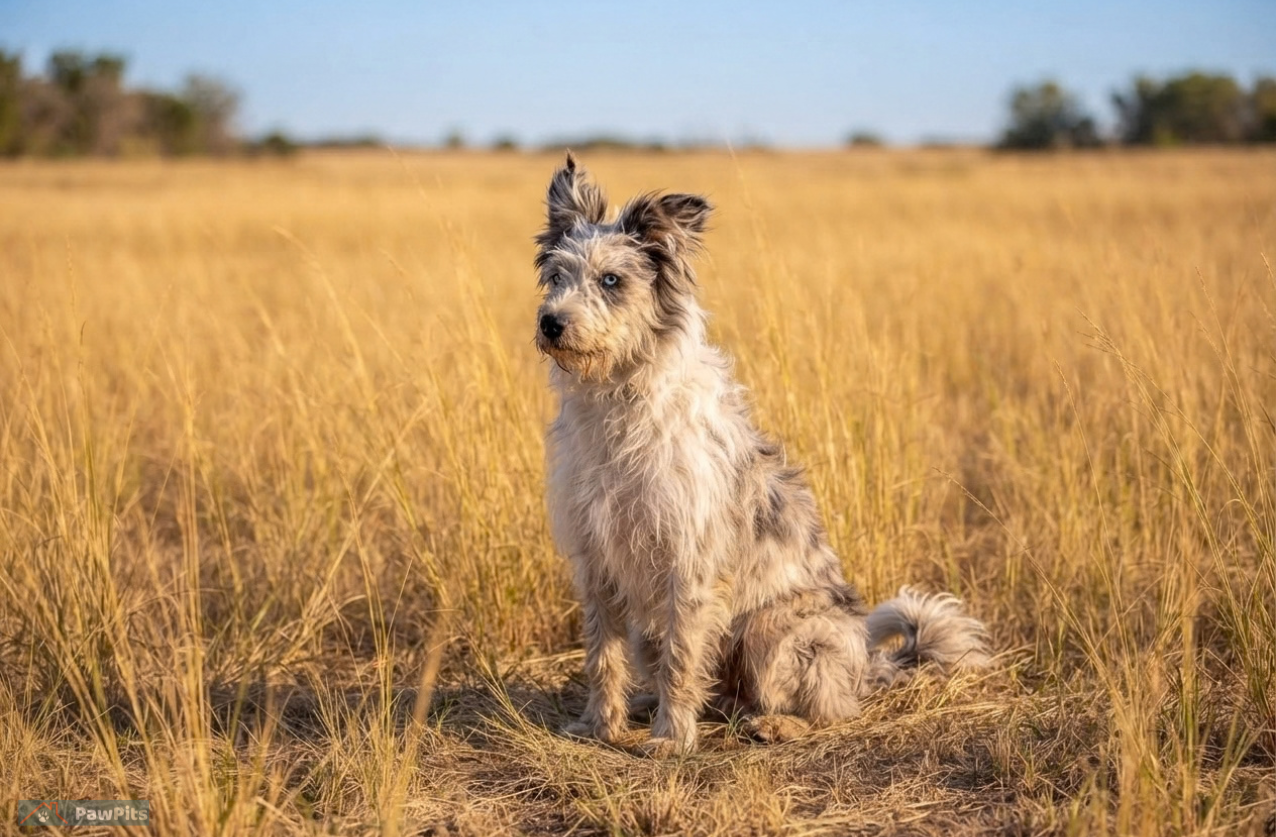
Search “Idaho Shag” online and you’ll mostly find two kinds of content: breathless listicles promising to shock you with “amazing traits,” and silence. That’s about right, honestly, this isn’t a breed with a marketing department. It’s a breed with a reputation, built one cattle drive at a time, by ranchers who don’t have much patience for dogs that can’t pull their weight.
So instead of another hype list, I wanted to talk to the people who’ve actually lived with these dogs for decades. Their answers were a lot less flashy than the internet suggests, and a lot more useful if you’re actually considering bringing one home.
Key Takeaways
- The Idaho Shag is a working-dog mix, typically Airedale terrier, border collie, and Australian shepherd, developed informally by Idaho ranchers, not a recognized purebred.
- Central Idaho breeder Susie Morton has worked her shags for three decades in the Challis, Pahsimeroi, and Lost River Valley areas.
- They’re prized less for elegance than for sheer resilience, owners describe dogs that get knocked around by cattle and go right back to work.
- They typically run 40 to 50 pounds, sturdy enough to hold their ground, agile enough to stay out of trouble.
- They’re stubborn. Every single owner brings this up, unprompted.
A Breed With No Rulebook
There’s no AKC standard for the Idaho Shag, no registry, no breed club deciding what counts. What there is, instead, is a rough consensus among ranchers in eastern and central Idaho about a cross that works: Airedale terrier for grit, border collie for herding instinct, Australian shepherd for versatility, sometimes a kelpie or heeler mixed in for good measure. On paper, it sounds like a shot in the dark. In the pasture, it apparently isn’t.
Susie Morton would know. She manages a ranch south of Mackay, Idaho, and bought her first Idaho shag roughly thirty years ago out of simple curiosity about the breed. She liked what she saw enough to keep some pups from that first litter and start breeding them herself, making her one of the earliest intentional Idaho shag breeders in the central part of the state.
She’s spent decades since working cattle with her shags across the Challis, Pahsimeroi, and Lost River Valley areas, rough, wide-open country where a dog either earns its keep or gets left behind.
What “Tough” Actually Means Here
Ask Morton what she values most about the breed, and looks aren’t on the list. “Whatever people think about their appearance, they’re really faithful and tough,” she’s said of her dogs, the kind of toughness that means a dog getting kicked by a cow shrugs it off and goes right back at it.
That resilience shows up as a running theme with every shag owner, not just Morton. Sam Clark, a rancher who grew up in the Lost River Valley and later moved to the Raft River Valley in southeastern Idaho, held out on the breed for years before finally trying one. He bought his first shag from a friend in Malta and hasn’t looked back, his young dog, Buddy, earned a reputation early for working cattle all day without slowing down.
It’s worth sitting with why that stamina matters so much out here. This isn’t suburban dog-park energy. It’s covering rough, high-desert terrain for hours, in weather that doesn’t care about your schedule, moving animals that outweigh the dog by a factor of twenty or more. A dog that quits halfway through isn’t just disappointing, it’s a liability.
The Stubborn Streak Nobody Skips Over
Here’s the part every owner brings up, usually with a laugh: these dogs are hard-headed. Morton doesn’t sugarcoat it. She’s been clear that new owners need to establish themselves early, there’s a real learning curve to living with a dog this independent, and skipping that step tends to show up later as a battle of wills you didn’t sign up for.
That’s not a flaw so much as a byproduct of what the dog was bred to do. A dog working cattle alone across open range doesn’t have time to wait for instructions on every move. It needs to size up a situation and act. That same independent streak that makes them excellent working partners is exactly what makes them a handful for an inexperienced or hands-off owner.
So, Is This the Right Dog for You?
Reading between the lines of what actual owners describe, a pattern emerges. Idaho shags do well with people who:
- Have real work for the dog to do, livestock, acreage, an active outdoor routine
- Are comfortable setting clear boundaries early and sticking to them
- Don’t mind a dog with a strong personality and opinions of its own
- Live somewhere the dog can actually move, this isn’t an apartment breed
And they’re probably not the right fit if you want a dog that defers easily, or if your daily routine doesn’t leave much room for exercise and mental engagement. None of the owners I found describe an easy dog. They describe a good one, which isn’t always the same thing.
Finding One
Because there’s no formal registry, finding an Idaho shag mostly comes down to word of mouth within ranching communities in Idaho, Montana, and parts of Wyoming. Breeders tend to be working ranchers themselves, breeding occasionally rather than running a kennel operation, and demand in recent years has outpaced supply as the breed’s reputation has spread beyond the ranches where it started.
The Bottom Line
The Idaho Shag isn’t a breed built for curb appeal, and nobody who actually owns one is trying to sell you on its looks. What they’re selling, if they’re selling anything at all, is a dog that shows up, takes a hit, and goes back to work. For the right owner, on the right piece of land, that’s worth more than papers ever could be.
Have you worked with an Idaho shag, or a similar regional ranch-dog mix? I’d genuinely like to hear how your experience compares, drop it in the comments.